An ideal is worth nothing, unless it can be measured
11 March 2026
NINE Timeless HUMAN Dignity Needs; Why a Global Dignity Index Is Essential for Universal Stability and Prosperity.
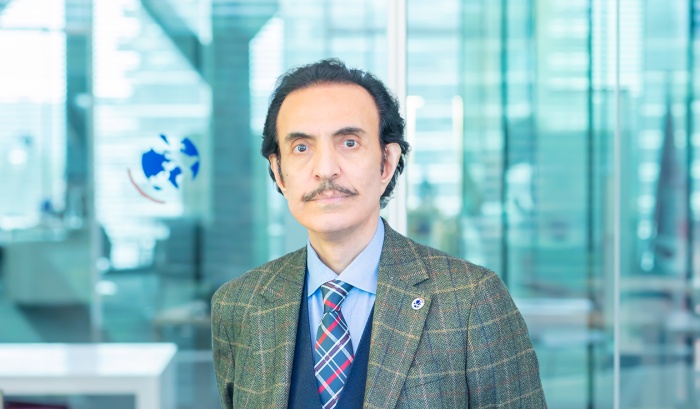
With war breaking out, economic inequality rife, and human egoism and emotion reaching feverous new heights, the search for new ideas and frameworks can often appear hopeless. Oxford University philosopher, neuroscientist, and geostrategist, Nayef Al-Rodhan argues we must transform human dignity from an abstract ideal to a Global Dignity Index: a measurable warning system, diagnostic tool, and guiding star for modern governments.
Why do societies fracture even as economic indicators improve, and why does institutional legitimacy erode despite formally accountable governance structures? Research across neuroscience, psychology, philosophy, and political science converges on a decisive yet neglected factor: human dignity. Far from a moral luxury, dignity is a universal human need and a strategically smart and efficacious foundation of governance, shaping cognition, emotion, and behavior. When dignity is upheld, societies tend toward cohesion, resilience, and prosperity; when it is denied, fear, resentment, mistrust, and instability follow.
The World Economic Forum meeting in Davos last month highlighted social fragmentation, declining trust, and the disruptive effects of technological change, but dignity itself remained largely implicit. This omission is telling: global governance frameworks often address symptoms of instability while overlooking one of its most reliable, pivotal and timeless underlying drivers.
Neuroscience and behavioral research show that humans are best described as emotional, amoral (in the sense of neutral morality), and egoistic.
Drawing on my work in neuroscience, philosophy, international relations, disruptive technologies, and global security, I believe that dignity must be understood as a set of concrete, measurable human needs that interact with the emotional, amoral, and egoistic attributes of human nature, as well as the core neuropsychological drivers shaping motivation, behavior, and decision-making. Based on this insight, I make the case for a Global Dignity Index: a practical tool to complement existing metrics, anticipate emerging risks, and ground governance in a more holistic, humane, respectful and scientifically informed vision of security across national, human, environmental, transnational, transcultural, and transplanetary domains.
Dignity as a functional requirement of human flourishing
Prevailing conceptions of dignity—most prominently the Kantian view of dignity as inherent and inviolable moral worth—have been indispensable in shaping human rights law and ethical discourse. Yet they remain largely declaratory. They specify what must not be done to individuals, but offer little guidance on the social, institutional, and neuro-psychological conditions required to sustain dignity in lived experience.
My dignity-based governance framework reconceptualizes dignity as far more than the mere absence of humiliation. It also extends beyond political freedoms, which can—and often do—coexist with alienation, exclusion, and discrimination. Instead, dignity is understood as the presence of universal, borderless, respectful, and sustainable recognition for all. This recognition is secured through a set of nine interdependent human dignity needs: reason, security, human rights, accountability, transparency, justice, opportunity, innovation, and inclusiveness. These needs are not aspirational ideals. They are empirically grounded requirements for eliciting the best, and restraining the worst, of humanity’s primal impulses and predilections.
Crucially, these dignity needs operate as a system. Persistent weakness in one domain, such as justice or inclusiveness, tends to cascade into others, producing compound vulnerabilities. This systemic logic underpins my Sustainable History Theory, which holds that long-term peace and prosperity depend not on episodic growth or institutional form alone, but on governance systems that reliably fulfil core human dignity needs over time. History also shows that civilizational resilience, cultural vigour and progress have rarely emerged in isolation, but have instead depended on sustained transcultural exchange, mutual borrowing, and shared frameworks of knowledge and meaning.
Human nature and the limits of idealized governance
Neuroscience and behavioral research show that humans are best described as emotional, amoral (in the sense of neutral morality), and egoistic (rational self-interest), and are motivated by what I have termed the NeuroP5 (Power, Profit, Pleasure, Pride, and Permanency). Cognition is deeply shaped by affect; moral judgments are context-dependent, and behavior is strongly influenced by self-interest and perceived threats.
These insights inform what I describe as the “Essential Ever-Present Tension Principle of Sustainable Governance and History”: stable, prosperous, and equitable governance can only be achieved by managing a persistent tug-of-war between three core attributes of human nature (emotionality, amorality, and egoism) and the nine universal human dignity needs. Emotionality is balanced by reason, security and human rights, while morality is balanced by accountability, transparency and justice. Egoism, in turn, is balanced by opportunity, innovation and inclusiveness.
Governance systems that privilege dignity norms without accounting for emotional, amoral, and egoistic drives risk becoming fragile and idealistic, while those that cater to raw self-interest or fear without dignity constraints tend toward repression and instability. Sustainable governance, therefore, requires institutional arrangements that neither deny nor indulge human nature, but consciously align its predispositions with dignity-affirming structures capable of sustaining cohesion, non-conflictual competition, legitimacy, and peace, regardless of the types of political systems or geocultural norms.
Dignity-based governance does not deny egoism or amorality; it works with them. Nor does it suppress emotion; rather, it seeks to orient emotional energy away from fear, misperception, and resentment toward understanding and regulated competitive interaction. By balancing core dignity needs with the emotional, amoral, and egoistic attributes of human nature, governance systems can expand individuals’ radius of moral concern, encourage peaceful and respectful coexistence across group boundaries, and reinforce the perceived legitimacy of institutions. When dignity needs are unmet, by contrast, predictable neuro-psychological dynamics narrow moral concern, heighten threat perception, and increase receptivity to polarization, division and conflict.
The geopolitical consequences of dignity deficits
The geopolitical consequences of dignity deficits are no longer abstract. In societies with accountable governance structures, including established democracies, populist backlashes are frequently explained in economic or cultural terms. Yet beneath these narratives lies a deeper dignity deficit: large segments of the population feel unseen, disrespected, or excluded from decision-making processes that shape their lives. This erosion of recognition fuels distrust in institutions, rejection of expertise, and susceptibility to emotionally manipulative narratives. In several European societies, recent political shifts have also elevated the salience of cultural reference points, including historical identity narratives, ethnic belonging, and theological symbolism, often articulated through simplified, binary political messaging. When such dynamics intensify, they can amplify perceptions of cultural displacement or loss among different groups, underscoring the need for governance tools capable of identifying and mitigating dignity-related stresses before they erode social cohesion, fairness, and long-term stability.
In fragile and conflict-affected regions, dignity deficits are even more pronounced. Protracted conflicts persist not only because of material scarcity or security dilemmas, but because communities experience sustained humiliation, exclusion, or denial of justice. Under such conditions, violence can come to be perceived as a rational means of restoring dignity needs, safety, pride, or recognition.
At the international level, dignity also shapes state behavior. Perceived disrespect, selective applications of international law, marginalization, or denial of status can lead to a defensive siege mentality, risk-taking, and confrontational postures. Within my Sustainable Global Security Theory, dignity therefore emerges as a core pillar of security alongside human, environmental, national, and transnational and transcultural dimensions. Security requires governance systems that reduce fear, resentment and exclusion at their neuro-psychological roots.
Why existing global indices fall short
Despite dignity’s central role in sustainable stability, security, and prosperity, it remains largely invisible in global governance metrics. Widely used instruments such as the World Bank’s Worldwide Governance Indicators, the World Economic Forum’s Global Competitiveness Report, and the Legatum Prosperity Index offer valuable insights into institutional quality, economic performance, and material well-being, yet overlook whether individuals feel respected, recognized, and meaningfully included in the systems that govern them.
Similarly, the Human Development Index (HDI) prioritizes health, education, and income, but fails to capture experiences of justice, recognition, or inclusion in social, cultural, and political life. The Social Progress Index moves beyond GDP by measuring access to basic needs and rights, yet remains focused on outcomes rather than lived dignity, while well-being frameworks such as the OECD Better Life Index and the Happy Planet Index do not systematically assess accountability, transparency, or neuropsychological security.
The Global Dignity Index would transform dignity from an abstract ideal into an operational, empirically grounded instrument for sustainable governance.
Measures of accountable and transparent governance centred on democracy and institutional quality reveal similar limitations. The V-Dem Democracy Indices and Freedom House’s Freedom in the World reports provide detailed assessments of civil liberties and electoral integrity, yet treat dignity largely as a by-product of procedural rights rather than a lived social condition. Societies with comparable governance scores may nonetheless display markedly different levels of trust, cohesion, and stability due to divergent experiences of dignity.
Even social cohesion surveys offer only partial insight. The World Values Survey and Eurobarometer capture attitudes and values, but rarely assess whether core dignity needs are fulfilled in everyday contexts, leading policymakers to overlook early warning signs of instability rooted not only in material deprivation, but in dignity erosion. What governance frameworks fail to measure, they fail to manage—and dignity deficits have become among the most reliable precursors of political fragmentation, polarization, and conflict in the contemporary world.
The case for a Global Dignity Index
If dignity needs are as central to sustainable peace, security, and prosperity as research suggests, they must be systematically assessed rather than rhetorically invoked. A Global Dignity Index would complement existing governance and development measures by capturing dimensions of human experience that are currently under-measured yet societally and geopolitically consequential.
At its core, the Global Dignity Index would operationalize the nine interdependent human dignity needs into measurable indicators. For example, “reason” could be assessed through access to quality education, media literacy, and informed public deliberation; “justice” through both procedural fairness (courts, rule of law) and perceptions of fairness in daily life; and “inclusiveness” through surveys gauging whether individuals feel heard, respected, and represented. Each dignity need would be measured using a combination of quantitative metrics, qualitative evaluation, and perception-based data, enabling a holistic view of objective conditions and lived experience.
The Index could be structured across several dimensions to reflect the multifaceted nature of dignity. At the individual level, it would assess everyday experiences of dignity, including access to opportunity, protection from harm, and the ability to exercise agency. At the institutional level, it would evaluate whether governance systems uphold rights, ensure accountability, and foster trust through transparent decision-making. Social, cultural, and normative dimensions would capture inclusion, recognition, and civic engagement, accounting for how identity, status, and group dynamics shape dignity.
The framework of nine human dignity needs explains why peace cannot be achieved through coercion, surveillance, or normative commitments alone.
Crucially, the Index would be longitudinal rather than static, tracking changes over time to identify emerging dignity deficits and assess the effectiveness of interventions. Advanced modelling could also illuminate how deficits in one domain cascade into others, generating instability at local, national, or global levels. Operationalizing a Global Dignity Index would require transdisciplinary collaboration, integrating insights from neuroscience, political psychology, sociology, economics, and philosophy. Advanced de-biased analytics and real-time data tools could generate nuanced insights, enabling policymakers to respond before dignity deficits escalate into conflict.
For policymakers and international institutions, the Index would serve multiple functions: as an early warning system for emerging instability, a diagnostic tool to identify root causes of tension, and an anchor for governance itself, embedding dignity as a measurable pillar of global security. By aligning policy, law, and institutional design with human flourishing, the Global Dignity Index would move governance beyond narrow procedural or economic objectives.
In short, the Global Dignity Index would transform dignity from an abstract ideal into an operational, empirically grounded instrument for sustainable governance, providing a compass for policymakers navigating today’s interdependent and rapidly evolving civilizational challenges.
Dignity can help build sustainable peace and prosperity
In an era marked by geopolitical fragmentation, technological disruption, environmental strain, and new unforeseen global challenges, dignity needs provide the missing infrastructure of sustainable peace and prosperity. Strategic stability is secured not merely by managing crises or deterring threats, but by creating social, economic, cultural and political conditions that reliably anticipate and prepare for human behavior, eliciting its best tendencies while restraining its worst.
The framework of nine human dignity needs explains why peace cannot be achieved through coercion, surveillance, or normative commitments alone. When governance systems fail to meet these needs, they activate primal survival-driven neurobehavioral dynamics (such as fear, injustice, resentment, and exclusion) that narrow moral concern and make conflict, division, and even violence appear rational and inevitable. Under such conditions, appeals to universal values lose force, and societies become increasingly vulnerable to polarization, misunderstandings and mistrust, a dynamic captured in my theory of Fear-Induced Preemptive Aggression, whereby persistent perceived threats trigger defensive hostility that escalates instability rather than containing it.
By identifying dignity deficits before they escalate, and by guiding timely policy interventions, the Global Dignity Index offers a practical pathway forward. It points toward a future in which societies—and the international system, on Earth and in outer space—flourish not in spite of human nature, but because governance aligns human predispositions with enduring primal dignity needs.
Disclaimer
This publication was originally published on the Institute of Art and Ideas website. The views, information and opinions expressed in this publication are the author’s/authors’ own and do not necessarily reflect those of the GCSP or the members of its Foundation Council. The GCSP is not responsible for the accuracy of the information.
Expert