Artificial Superintelligence, Sentience, and Singularity: Balancing Unprecedented Prosperity with Dignity and Survival
03 February 2026
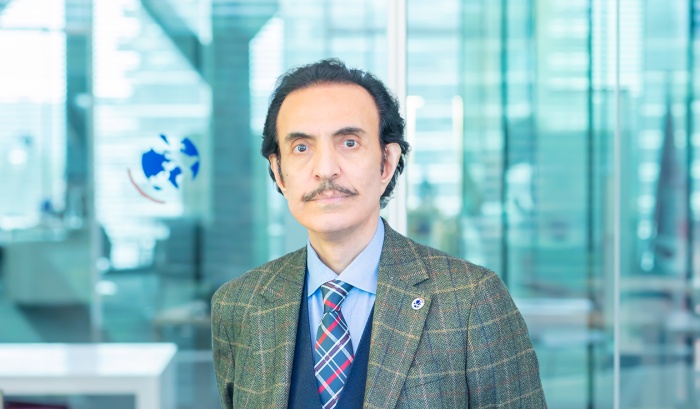
Nayef Al-Rodhan argues that we may become the first civilisational species to engineer the end of its own primacy, and the last one with the opportunity to choose a different path.
As artificial intelligence approaches forms of cognition that match or exceed human intelligence, the questions confronting humanity are no longer merely technical. They are ethical, philosophical, and civilisational: what moral status should advanced machines possess? How might artificial superintelligence reshape human dignity and agency? And when does a tool become a rival or successor?
These questions are captured in my concept of Homo HURAQUS 2050: a prospective hybrid civilisational horizon emerging from the convergence of artificial superintelligence, humanoid robotics, quantum intelligence, and synthetic biology. It offers a framework for a future which raises fundamental dilemmas about preserving dignity, accountability, and moral responsibility once cognition and agency are no longer exclusively human.
As AI systems acquire greater autonomy and proto-sentient traits, moral recognition becomes unavoidable. If machines exhibit identity continuity, goal-directed behaviour, or self-preservation, debates over dignity cannot remain anthropocentric. Homo HURAQUS reframes dignity as a principle linked to intelligence and agency, not biology alone.
Three concepts anchor this transformation: artificial superintelligence, sentience, and the technological singularity. Together, they point to a potential reordering of civilisation whose outcome depends on humanity’s ability to embed ethical commitments, above all respect for human dignity, into the design, governance, and deployment of advanced AI.
Disclaimer: This publication was originally published by the Global Policy website. The views, information and opinions expressed in this publication are the author’s/authors’ own and do not necessarily reflect those of the GCSP or the members of its Foundation Council. The GCSP is not responsible for the accuracy of the information.
Author