Switzerland in OSCE chairmanship: second half
23 July 2026
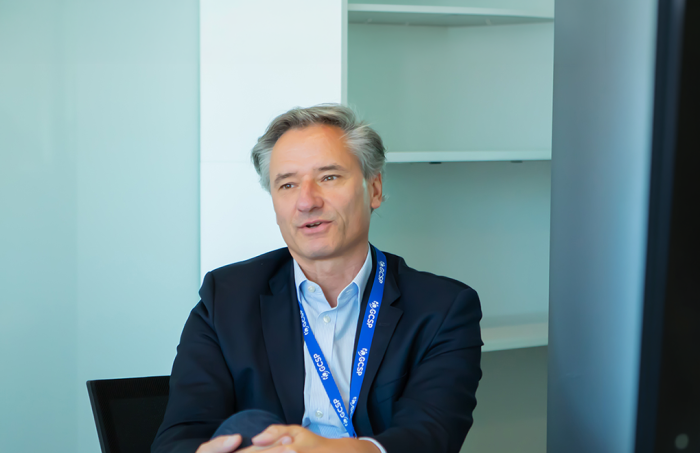
Switzerland has begun the second half of its year as chairman of the Organization for Security and Co-operation in Europe (OSCE). OSCE expert Walter Kemp does not rule out the possibility that the prospect of a military conflict between Russia and the West will give the organization new impetus, "with Russia and the United States."
Does the OSCE take a summer break?
The OSCE normally takes a short break during the summer, but crises often erupt in August. Therefore, the chairmanship, such as Switzerland this year, must always be vigilant during the summer. The crisis in Ukraine, for example, never truly subsides.
Where does the organization stand at the halfway point of the Swiss presidency?
As we saw at the World Cup this summer, the halfway result is very often not the final result. I think we'll have to wait until late December before we can properly assess the Swiss chairmanship. At the halfway point, however, we can evaluate Switzerland's performance against its own five Swiss priorities.
Let's take them one by one, starting with the Helsinki Principles.
The Swiss Chairman has always emphasized adherence to the Helsinki Principles. In a certain sense, this was facilitated by the fact that we commemorated the 50th anniversary of the Helsinki Final Act last year. Switzerland is trying to breathe new life into these principles and ensure that they are not merely historical principles, but guiding principles that member states continue to follow. Recent developments show us what happens when states no longer respect these principles – which is why we have this terrible situation in the OSCE area.
What about the second priority, including multilateral diplomacy?
This is the daily bread of Swiss diplomacy. Switzerland holds weekly consultations with all member states, including Russia. This is a major undertaking for the team, particularly in Vienna. As chair, Switzerland strives to be as impartial as possible, but it is clearly trying to balance this priority with its primary one: adhering to the Helsinki Principles. The chair, Federal Councillor Cassis, has visited a number of member states, including Ukraine and Russia, as well as Kazakhstan, Moldova, and several Balkan countries. This is part of his role as the OSCE's spokesperson. He emphasizes the OSCE's role as a forum for de-escalating tensions and discussing the future of European security, most recently at the Annual Security Review Conference . This is quite bold, because some member states do not believe the time is right to discuss the future of European security. Foreign Minister Cassis says the OSCE is the logical place for this. I certainly agree.
The third priority is anticipating new technologies for a safe and humane future.
This is something the Foreign Minister is passionate about, and it's certainly an area where Switzerland has a lot to offer, especially in international Geneva. Switzerland hosted a good conference in Geneva in May. From what I hear, the participants appreciated this relatively new impetus to address the impact of technology on security. I think, as far as strategic anticipation is concerned, there's still room to broaden our horizons.
What about the fourth priority: democracy, the rule of law, and human rights?
This is a tough nut to crack because the organization is based on consensus, and many member states evade some fundamental OSCE principles and obligations. Nevertheless, the Swiss chairmanship has kept the spotlight on the so-called “human dimension.” For example, some states have invoked the Moscow Mechanism, which holds Russia accountable for human rights violations, such as those in the annexed Ukrainian territories.
The fifth priority concerns the OSCE's ability to act.
Switzerland has had the most success here, but also faces its greatest challenge. It succeeded in securing the adoption of a comprehensive budget for the first time in five years. This is vital for the functioning of the OSCE as an organization. At the same time, it is pushing forward with the reform agenda and has a strong ally in the United States, which made its approval of the budget contingent on a reform discussion. The Chairman is working with OSCE executive structures, such as the Secretariat, as well as with the Office for Democratic Institutions and Human Rights (ODIHR), on planning a possible future role for the OSCE in Ukraine, including ceasefire monitoring, election observation, and a package of measures that the OSCE could assume if conditions improve. The Chairman has visited operations in the field, which are among the organization's assets, and has emphasized their continued value. The major challenge, however, lies in finding a country to assume the chairmanship in 2027. At this point, it would usually be known who that would be, and those involved would have at least a year to prepare. Today, that's not the case; there's no real troika. Therefore, finding a country to take over the chairmanship next year will be a priority in the second half of Switzerland's presidency. Switzerland needs someone to whom it can hand over the reins.
Do you see a change in the assessment of the usefulness of the OSCE?
With the escalation of the conflict between Russia and Ukraine, it is very difficult for a consensus-based organization focused on facilitating cooperation to operate. Now that Russia is talking about war with the West, even more is at stake. This demonstrates why an organization like the OSCE is necessary to facilitate diplomatic dialogue, to enable contact between military and military sides.
How much leeway does the chairmanship have in this geopolitical environment?
Obviously, the situation is very difficult because of the conflict between Russia and Ukraine and growing tensions between Russia and the West. The forum, or format, for discussions about a future security arrangement is the Structured Dialogue, chaired by Norway. This is an informal body that meets fairly regularly. Norway is trying to say: Look, even in a zero-trust environment, we need to use the OSCE's toolbox to establish guardrails so that we can achieve some kind of restraint and management of relations along the 5,000-kilometer border between Russia and the West. Reducing the risk of accidents and incidents, discussing confidence- and security-building measures, arms control, the impact of technology on existing commitments—things like that. Slowly, I think, many member states are beginning to see this as being in their own interest. Switzerland is certainly pushing in this direction, but it is not chairing this process. To continue the football analogy: the OSCE chairmanship has a unique role because it is simultaneously that of a referee, ensuring adherence to the rules; a coach, in the sense of motivating member states and setting a strategy; and also a playmaker, striving to achieve the set objectives. Combining these roles demands a great deal from any country, especially in today's football arena. Of all 57 member states, Switzerland is probably the best equipped and positioned to manage the organization during this challenging time. For this reason, the absence of a chairmanship for 2027 is all the more worrying. The country will have a very short preparation period, and 2027 will be no easier than 2026.
Which countries are being considered for the 2027 presidency?
Cyprus was a candidate, but it hasn't garnered consensus. I believe Georgia has expressed interest. There's talk of a neutral EU country, like Ireland or Austria. I recently heard Hungary mentioned as a possibility. Clearly, it has to be a country that's interested and has the support of all 57 member states. That's not so easy.
The OSCE Parliamentary Assembly recently held its annual meeting in The Hague, without Russia's participation. The final declaration is a clear reaffirmation of the Helsinki principles and the Charter of Paris. How much is that worth?
It is wonderful that members of parliament from various member states are engaged, that these issues are important to them, and that they emphasize and defend the significance of the OSCE principles. This is absolutely vital. But as you say, Russia does not participate in the Parliamentary Assembly. This is the major difference to the Permanent Council, where diplomatic engagement with Russia is unavoidable at a certain point. This is something Switzerland is trying to achieve.
With success? Is Russia involved?
As I understand it, Russia, including its ambassador, is quite active. It's also interesting that a US ambassador has been appointed for the first time in at least a year. This should draw some attention from Washington, and there are opportunities to use the OSCE for American interests. I believe the United States is quite willing to engage in dialogue with Russia. The OSCE is a good forum to discuss strategic stability, confidence- and security-building measures, and reforms.
What is meant by “reform”?
For some, it means reforming the OSCE itself—making the organization more effective and efficient. For others, it's a code word for curtailing or reducing certain aspects of its activities. For a small minority, reform has more to do with using the OSCE to shape the future European security order. This is less about reform and more about setting a direction and providing leadership, which is very difficult in the current context. Nevertheless, for a combination of reasons and with different motives, we could see a peculiar coalition of states, including Russia and the United States, who believe the OSCE can be useful in a similar way to how it was in the 1980s and 1990s, and who somehow want to work through the OSCE.
What does this mean for the OSCE ministerial meeting in Lugano in December? Should we expect any steps towards easing the conflict between Russia and the West? Is that realistic?
I'll use the football analogy again. A lot happens in the last 10 or 15 minutes of the game, or in extra time. That's why I think the Swiss chairmanship must stay with it until the end. It would be a success if a significant number of foreign ministers appeared in Lugano and demonstrated a willingness to engage. It would show that they still consider the OSCE important, that they want to use it as a forum for dialogue, that they are prepared to talk not only with their friends but also with their adversaries. Let's wait and see. It's also possible that things will get worse before they get better. The ministerial meeting in Lugano could either be an urgent opportunity to establish guardrails against a further deterioration of the situation, or an opportunity to chart the course for a more predictable and peaceful management of relations in the foreseeable future.
There are concerns about a military confrontation between Russia and Western Europe. Do you take this seriously?
Of course. There needs to be a greater awareness of the urgency of de-escalating the situation and engaging in dialogue. Some of this will have to happen bilaterally, between Russia and Ukraine, between Russia and the United States. But all OSCE participating States are affected and have an interest in ensuring that things don't get even worse.
Where is NATO in all of this?
Some of what could be done in the context of the OSCE would need to be discussed among NATO members, such as confidence-building measures, restraint measures, advance notices, force deployment, and other matters. Currently, no talks are taking place within the NATO-Russia Council, so NATO states could engage in dialogue with Russia and Belarus within the context of the OSCE.
One more question: In the current context, is the insistence on human rights more of a bothersome nuisance for OSCE diplomacy, or an area where common ground could be found?
In the past, OSCE institutions and key member states have prioritized the human dimension and human rights. This group of states is shrinking, and the space for civil society is diminishing. Therefore, it is crucial to maintain a focus on the human dimension, both as an end in itself and in relation to the other dimensions of the OSCE's activity: the political and military aspects of security as the first dimension and economic and environmental concerns as the second. For several years, there has been a strong imbalance in favor of the human dimension, with the first dimension being almost forgotten. Now, we need a stronger focus on the first dimension without neglecting the third, as the OSCE has always maintained a comprehensive view of security. It must also be said that the OSCE is not solely comprised of member states but also of civil society. The Helsinki Committees of the 1970s and 1980s were inspired by the Helsinki Principles and held their governments accountable for implementing them. I think some of these commitments need to be updated in light of new realities, for example, regarding the impact of technology on fundamental freedoms and human rights. Some states find this annoying, but that's no reason not to do it.
Disclaimer
This article was originally published on the SGA-ASPE website in Swiss German. The views, information and opinions expressed in this publication are the author’s/authors’ own and do not necessarily reflect those of the GCSP or the members of its Foundation Council. The GCSP is not responsible for the accuracy of the information and translation.
Expert